Unknown's avatar

Review of James Marcus’s “Glad to the Brink of Fear: A Portrait of Ralph Waldo Emerson” in TLS

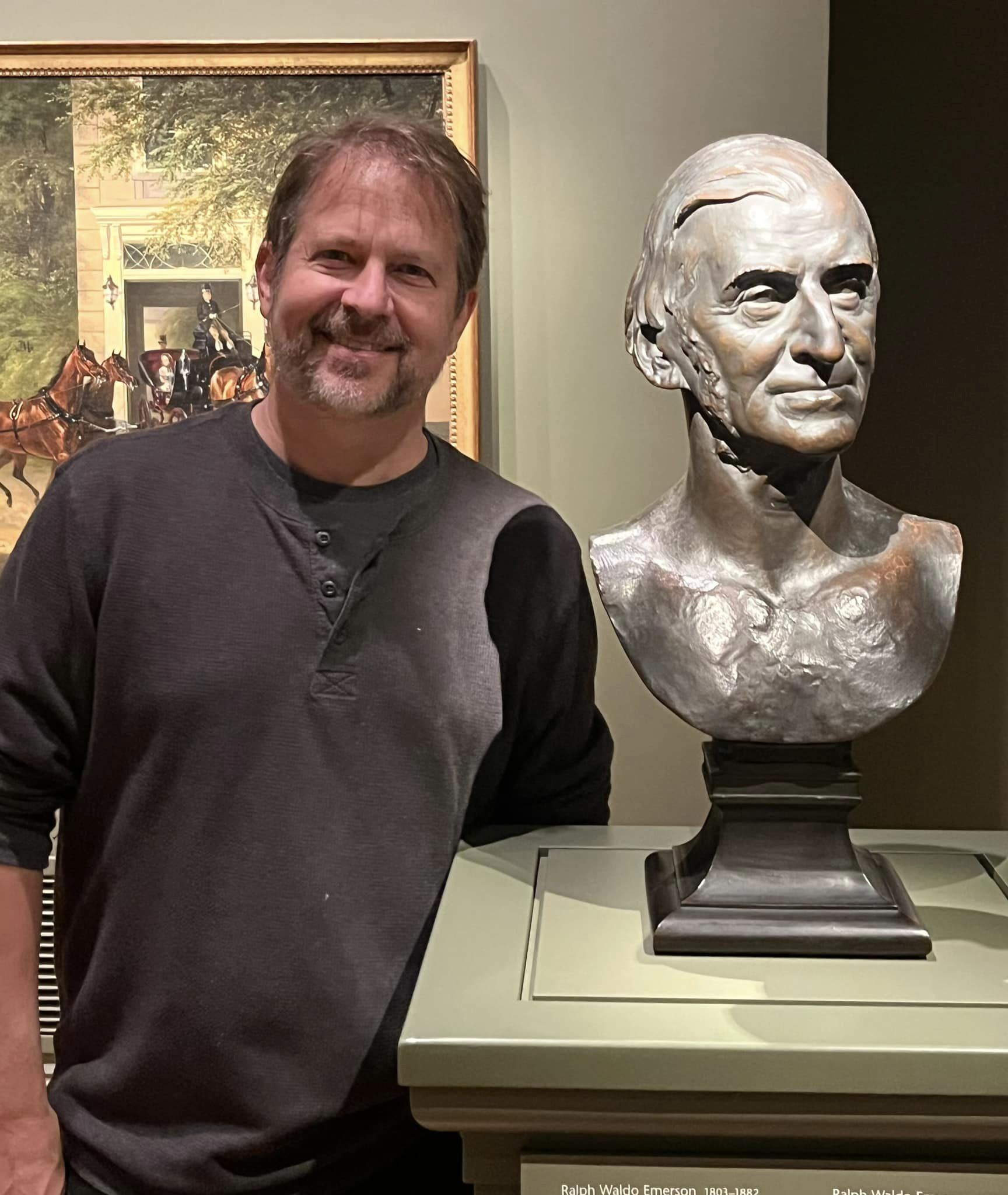
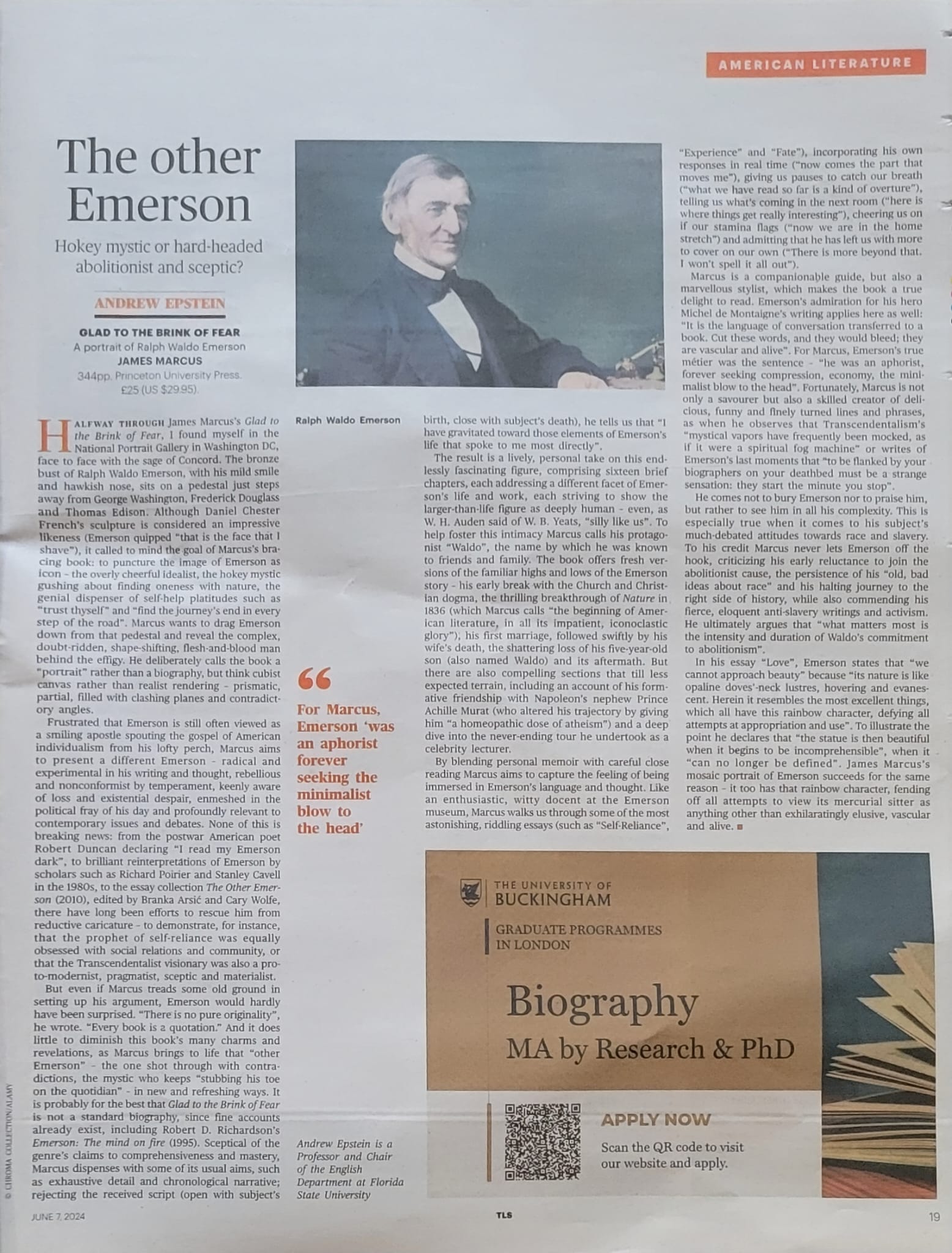
I had the pleasure of reviewing James Marcus’s delightful new book Glad to the Brink of Fear: A Portrait of Ralph Waldo Emerson for the TLS (Times Literary Supplement). I happened to come face to face with a bronze statue of the old sage of Concord himself in the National Portrait Gallery in Washington DC while I was reading the book, which made it into the first paragraph of the review.

Unknown's avatar

Interview: Network for New York School Studies

This isn’t particularly new, but I never got around to posting it here. If you’re interested in learning more about my work and, in particular, my long-standing engagement with the New York School of poets, here is an interview I gave on the subject in 2022 with scholars Rona Cran and Yasmine Shamma, for the Network for New York School Studies:

Unknown's avatar

Podcast: My Discussion of John Ashbery’s “Street Musicians” on “Close Readings”

The poetry scholar Kamran Javadizadeh recently launched a fun and edifying new podcast called “Close Readings.” As Javadizadeh describes it, each week he “talks to a different leading scholar of poetry about a single short poem that the guest has loved. You’ll have a chance to see the poem from the expert’s perspective—and also to think about some big questions: How do poems work? What can they make happen? How might they change our lives?”

You can find episodes of “Close Readings” on Apple PodcastsSpotify, and Google Podcasts, and you can (and should!) also sign up to receive a newsletter from Kamran, in which he sends program notes, links, and summaries of each episode.

Last month, I had the delightful opportunity myself to go on the podcast to discuss one of my favorite John Ashbery poems, “Street Musicians,” the first poem in his 1977 book Houseboat Days. Kamran and I talk about Ashbery’s life and work in general, before turning to this haunting and beautiful poem of mid-career, which I read as an elegiac poem about what it’s like to outlive a friend or brother, and about Ashbery “feeling called to move on” — from his friend Frank O’Hara’s death, from his own youth, from living on the margins.  (An excerpt from my first book about “Street Musicians” can be found here, too). You can listen to our discussion of this poem here, or on Spotify, etc), and you can also read Kamran’s comments about our conversation here.

Unknown's avatar

Flow Chart Foundation Celebrates Ten Years of “Locus Solus”

As I recently noted here, it’s been almost exactly 10 years since I decided to create a website devoted to the New York School of poets and artists and name it Locus Solus, after the legendary little magazine that briefly served as the movement’s house journal.

To mark the occasion of this anniversary, the Flow Chart Foundation (the wonderful organization devoted to the legacy of John Ashbery) and the critic Mandana Chaffa generously invited me to have a conversation about the blog, its mission and history, and the New York School more broadly, which was held virtually on Wednesday, 6/15/23.

Here is a recording of the event. Thank you to all who came and to everyone for reading it over the years!

Unknown's avatar

“David Berman, Ambivalent Aphorist” at Post45: Contemporaries

An essay of mine about the legendary indie rock musician and poet David Berman (of Silver Jews fame) was recently included in a terrific new cluster of essays devoted to Berman’s work at “Post45 Contemporaries.”

In my essay, I wrote about Berman’s mixed feelings about his own incredible gift for creating pithy, memorable phrases: “He was strangely good at crafting aphorisms, he knew it, and that fact made him sick. How could someone so distrustful of truth claims be so good at dispensing truth claims?”

The whole set of essays, edited by Sarah Osment and David Hering, is wonderful, and I’m very happy to have my piece appear in such fine company. There’s an extra bonus, too — the musician Bob Nastanovich, a member of both Pavement and Silver Jews and dear friend of Berman’s, contributed a touching afterword to the collection. (I’m not sure what my 20-something self would’ve thought about having something he wrote in the same collection with one of the guys from Pavement, but I think he would’ve been surprised and delighted).

Unknown's avatar

On 38 Days of Slow Reading: A Discussion of John Ashbery’s “Flow Chart” (2/15/22)

This is somewhat old news, but last year, The Flow Chart Foundation — the organization devoted to exploring “poetry and the interrelationships of various art forms as guided by the legacy of American poet John Ashbery” — hosted a 38-day Twitter “slow reading” of Ashbery’s book-length poem Flow Chart, in which they invited participants and onlookers to take part in (or just watch and listen) a group discussion of the experience, which was led by poet and editor Emily Skillings.

To mark the conclusion of the “slow reading” project, the Flow Chart Foundation hosted an online event (which you can see in full above) on February 15, 2022, which brought together Skillings, poet and translator Marcella Durand, and myself to discuss the poem and our experience of reading it and to share questions, revelations, and conundrums, with input from those attending. Moderated by Flow Chart’s Executive Director, Jeffrey Lependorf.

Unknown's avatar

Book Announcement: “The Cambridge Introduction to American Poetry Since 1945”

I’m pleased to announce that my third book, The Cambridge Introduction to American Poetry Since 1945, was recently published by Cambridge University Press. The book is part of Cambridge’s “Introduction to Literature Series,” and is designed to be a wide-ranging and accessible introduction to the poetry of this period. It can be purchased through Amazon or Cambridge University Press.

Here is a description of the book:

Contemporary American poetry can often seem intimidating and daunting in its variety and complexity. This engaging and accessible book provides the first comprehensive introduction to the rich body of American poetry that has flourished since 1945 and offers a useful map to its current landscape. By exploring the major poets, movements, and landmark poems at the heart of this era, this book presents a compelling new version of the history of American poetry that takes into account its variety and breadth, its recent evolution in the new millennium, its ever-increasing diversity, and its ongoing engagement with politics and culture. Combining illuminating close readings of a wide range of representative poems with detailed discussion of historical, political, and aesthetic contexts, this book examines how poets have tirelessly invented new forms and styles to respond to the complex realities of American life and culture.

The Cambridge Introduction to American Poetry Since 1945

  • Provides comprehensive coverage of a broad range of movements, trends, and individual poets, with special attention to the increasingly diverse nature of American poetry; explores a variety of traditions, aesthetic predispositions, poetic communities, and subject positions
  • Combines a thorough account of literary history and overview of historical and political contexts with extensive discussion of individual poet’s careers and detailed close readings of representative poems
  • Introduces readers to quite challenging, experimental, and difficult poetry in a way that is lively, engaging, and accessible

Here is the Table of Contents for the book:

Introduction. American poetry since 1945

Part I. American Poetry from 1945 to 1970:
1. The raw and the cooked: the new criticism versus the new American poetry
2. The Black Mountain poets
3. The beats and the San Francisco renaissance
4. The New York school of poetry
5. The middle generation, Elizabeth Bishop, and confessional poetry
6. Deep image poetry
7. African American poetry from 1945 to 1970

Part II. American Poetry from 1970 to 2000:
8. A new ‘mainstream’ period style in poetry of the 1970s and 1980s
9. Language poetry
10. Feminism and women’s poetry from 1970 to 2000
11. Diversity, identity, and poetry from 1970 to 2000

Part III. Into the New Millennium: American Poetry from 2000 to the Present:
12. New directions in American poetry from 2000 to the present
Conclusion

I hope you’ll check it out at Amazon or Cambridge University Press!

Unknown's avatar

On Wallace Stevens and the New York School of Poets

Image

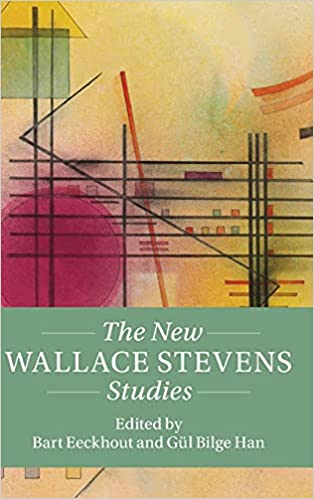
I contributed an essay to an exciting new collection of essays on Wallace Stevens entitled The New Wallace Stevens Studies, edited by Bart Eeckhout and Gül Bilge Han, which was recently published by Cambridge University.

My piece argues that Stevens’s influence on poets of the New York School (like Frank O’Hara, John Ashbery, Barbara Guest, James Schuyler, Ted Berrigan) — and the avant-garde more broadly — has been overlooked, to the detriment of both.  

For more on my piece, see this post at Locus Solus.